Because acupuncture is truly holistic, we may be able to address two or more conditions all at once showing the power of TCVM.
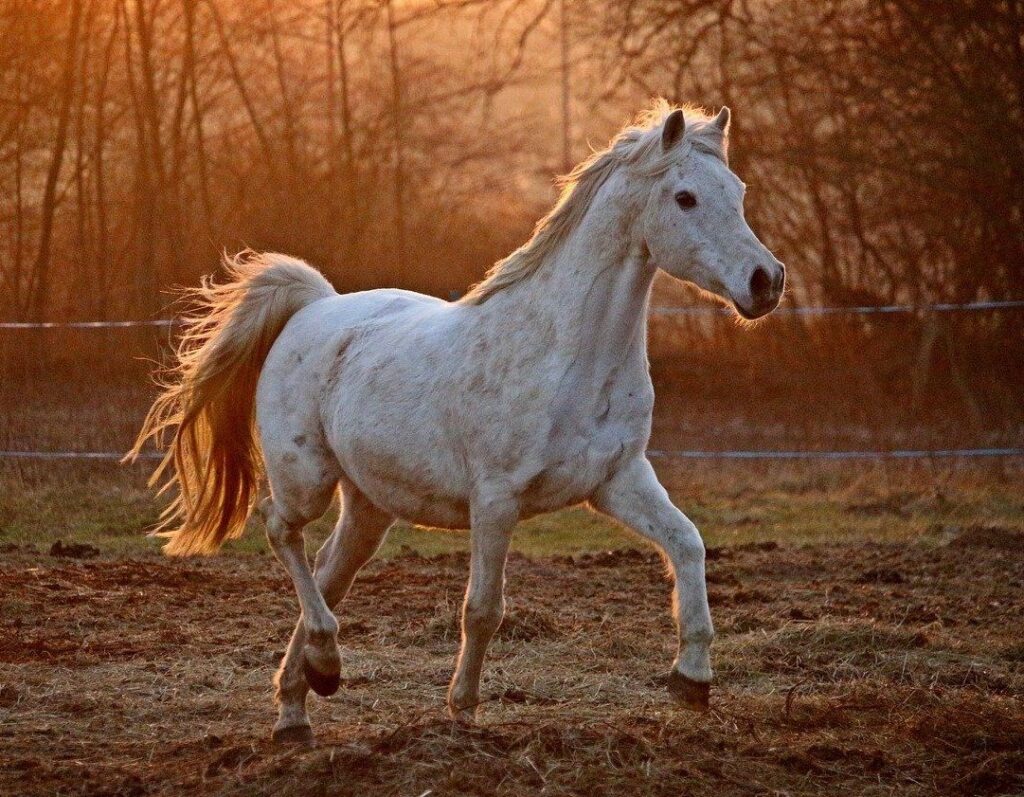
I was working with an older Arabian gelding in Germany. I was primarily called in to address his equine asthma complementary to undergoing conventional treatment. He also has age-related limitations in his musculoskeletal system, which were mentioned briefly. He still is in light work, and the owner’s primary concern was the respiratory condition.
Traditional Chinese Veterinary Medicine (TCVM) views the horse holistically. All symptoms and signs are collected to arrive at a TCVM diagnosis based on these observations and the principles of TCVM. For example, the selection of acupoints may differ for different horses that all exhibit the symptom of “coughing.” One of the fundamental goals of acupuncture and acupressure is to support the body’s ability to self-regulate, thus restoring its natural balance. When working with TCVM in a classical or traditional sense, we do not address symptoms – that would be “cookbook acupressure / acupuncture” – but establish the underlying pattern of disharmony.
With the aforementioned gelding, I used a combination of acupressure and acupuncture, selecting my acupoints according to Dr. Tan’s Balance Method.
The day after the session, the owner contacted me, delighted. Not only had his cough already improved somewhat, but a musculoskeletal issue had also been alleviated. While the owner had initially mentioned musculoskeletal problems, she had not shared details such as the gelding struggling to pick up the right canter lead. She explained that for some time, he had only been able to strike off correctly on the right lead with considerable effort and after repeated prompting and correction. The day after the acupuncture session, she lunged him and was surprised and pleased that, after changing to the right lead, he immediately struck off into the right canter without any fuss. At that point, he maintained the canter for several strides.
After the second session – which supported further improvements of the respiratory condition – the gelding continued to easily pick up the canter on the right and maintained it for several laps. We were able to stabilise and improve this further with the support of the following TCVM sessions.
While we may find it hard to grasp and understand why a session that addresses respiratory issues may also bring positive results for musculoskeletal issues from a Western perspective due to its tendency to compartmentalise medical issues, such an outcome makes total sense from a TCVM perspective and its way to view and assess a body.