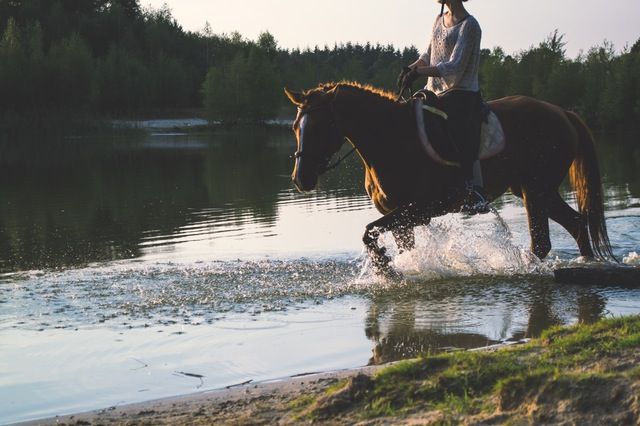
Allgemeine Vorsichtsmaßnahmen und Akupressur für den Hitzeausgleich
Am vergangenen Sonntag, dem 21. Juni, war die Sommersonnenwende. Der längste Tag des Jahres spielt in der Traditionellen Chinesischen Medizin (TCM) eine entscheidende Rolle. Er ist der jährliche Höhepunkt der Yang-Energie und symbolisiert ein Maximum an Licht, Bewegung, Fülle und Aktivität. Nach der Fünf Elemente-Theorie handelt es sich um die Jahreszeit des Feuers, die vom Herzen beherrscht wird. Und da es das Jahr des Feuerpferdes ist, gibt es im diesjährigen System besonders viel zusätzliche Feuerenergie.
Da jedoch alles dynamisch ist und sich ständig verändert, stellt im natürlichen Kreislauf das höchste Yang zugleich einen Wendepunkt dar: Auf dem Höhepunkt des Sommers entsteht das Yin. Und während wir am längsten Tag des Jahres die Lebenskraft feiern, würdigen wir zugleich die erste subtile Einladung zur Ruhe und Erholung.
Dadurch ist die Zeit um die Sommersonnenwende herum ein idealer Zeitpunkt, um innezuhalten und das allgemeine Wohlbefinden unserer Pferde zu beurteilen. Anstatt darauf zu warten, dass offensichtliche Probleme auftreten, ermuntert uns die TC(V)M, subtile Veränderungen wahrzunehmen, zu beobachten und das Gleichgewicht zu unterstützen, bevor sich Ungleichgewichte als offensichtliche Symptome manifestieren.
Zusätzlich zu einer allgemeinen Kontrolluntersuchung sehen wir uns derzeit in vielen Teilen Europas mit überdurchschnittlich warmen oder heißen Temperaturen konfrontiert und müssen Wege finden, mit der Hitze umzugehen und uns daran anzupassen, um die Belastung durch die Umweltbedingungen für unsere Pferde und uns selbst zu verringern.
Aus Sicht der chinesischen Medizin ist Hitze einer von sechs exogenen, klimatischen pathogenen Faktoren, die in den Körper eindringen und Krankheiten verursachen können. In der Regel findet ein solches Eindringen nur dann statt, wenn ein Ungleichgewichtvon Yin und Yang oder eine Störung des Qi-Flusses im Körper vorliegt. Hitze ist ein Yang-Faktor, der die Körperflüssigkeiten verbraucht und dadurch das Yin schädigen kann.
In Hitzeperioden müssen wir das Yin stärken: Der Schwerpunkt sollte auf Abkühlung, Flüssigkeitszufuhr und Ruhe liegen.
Praktische Schritte während einer Hitzewelle
Unsere Pferde können wir wie folgt unterstützen:
- Sorge dafür, dass die Pferde rund um die Uhr Zugang zu Wasser haben
- Uneingeschränkter Zugang zu frischem, sauberem und kaltem Wasser
- Kontrolliere Wasserquellen, Tränken und Eimer regelmäßig, um sicherzustellen, dass sie sauber sind und funktionieren
- Sorge für Schatten und Belüftung
- Sorgen Sie dafür, dass die Pferde Zugang zu natürlichem Schatten wie Bäumen oder gut belüfteten Ställen und Unterständen haben.
- Sorgen Sie in Ställen für eine optimale Belüftung, indem Sie Türen und Fenster öffnen.
- Vermeide nach Möglichkeit schlecht belüftete Räume für Deine Pferde.
- Passe Trainingseinheiten den Temperaturen an
- Die beste Option ist die Hitze zu vermeiden
- Reiten Sie oder trainieren Sie die Pferde zur kühlsten Tageszeit, beispielsweise am frühen Morgen oder am späten Abend.
- Reduziere Intensität und Dauer
- Wenn es zu heiß ist, mache eine Pause. Morgen ist ein neuer Tag.
- Pferde richtig abkühlen
- Spritze das Pferd mit kaltem oder kühlem Wasser ab
- Bedecke dabei möglichst den ganzen Körper mit Wasser
- Ziehe überschüssiges Wasser NICHT ab!
- Behalte den Elektrolythaushalt im Blick
- Füttere Pferden, die stark schwitzen, gegebenenfalls Elektrolyte zu
- Achte auf Anzeichen der Überlastung durch Hitze
- Übremäßges oder langes Schwitzen
- Schnelle Atmung, die sich in Ruhe nicht verlangsamt
- Geblähte Nüstern
- Unregelmäßiger Herzrhythmus
- Lethargie oder Schwäche
- Verminderte Leistung
- Langsame Erholung nach dem Training
- Muskelkrämpfe
- Dunkle Schleimhäute
- Stolpern oder schlechte Koordination
- Dehydrierung
- Verweigerung der Futter- oder Wasseraufnahme
- Dunkler Urin
- Verminderter Harnabsatz
Wenn ein Pferd Anzeichen von extremer Belastung durch Hitze aufweist, rufe den Tierarzt. Es handelt sich um einen Notfall!
- Besonders gefährdete Pferde
- Ältere Pferde
- Junge Pferde
- Übergewichtige Pferde
- Pferde mit Vorerkrankgungen wie equinem Asthma, kardiologischen Problemen, Cushing, kolikanfällige Pferde
Eine Kombination aus reichlich Wasser und Schatten, einer angemessenen Anpassung der Arbeitsbelastung und einer sorgfältigen Beobachtung ist der wichtigste und beste Weg, um das Wohlbefinden unserer Pferde während der Sommerhitze zu gewährleisten.
Akupressur zum Ausgleich von Sommerhitze
Zusätzlich zu den oben genannten Vorsichtsmaßnahmen ist jetzt ein guter Zeitpunkt, um Deine Routine mit der Arbeit mit Akupressurpunkten zum Ausgleich der Körperwärme zu ergänzen. Dies ist zudem eine Gelegenheit, wertvolle Zeit mit Deinen Pferden zu verbringen und die Bindung zu ihnen zu stärken, während Trainingseinheiten vielleicht eine Pause einlegen oder das Tempo etwas gedrosselt wird.
Auch hier liegt unser Schwerpunkt darauf, den Körper unserer Pferde dabei zu unterstützen, das Yin zu stärken und überschüssiges Yang sowie Hitze aus dem Körper abzuleiten.
Es gibt – neben einer Reihe weiterer – drei Akupunkturpunkte, die sich hierfür eignen: Dickdarm 11, Lenkergefäß 14 und Perikard 3.
Hinweis: Es handelt sich um eine Auswahl an Akupressurpunkten, die häufig zur Ausleitung von Hitze und zur Stärkung des Yin eingesetzt werden. Um die wirksamsten und am besten geeigneten Akupressurpunkte für Dein Pferd auszuwählen, ist eine individuelle Untersuchung durch einen Tierarzt, der Traditionelle Chinesische (Veterinär-) Medizin (TC(V)M) praktiziert, oder durch einen TC(V)M-Therapeuten erforderlich.
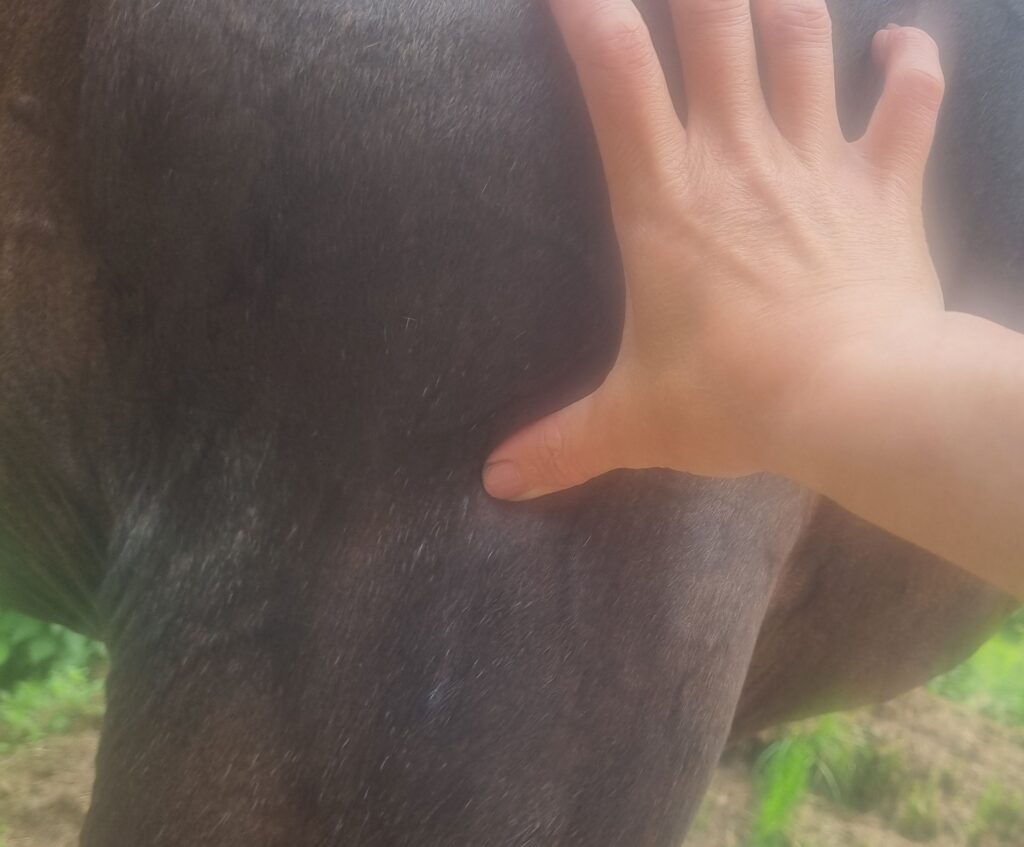
Dickdarm 11
Da Chang 11 | Qu Chi | Gekrümmter Teich | Erdpunkt
Lokalisierung: In der Vertiefung am lateralen Ende der Ellenbogenbeugefalte vor dem lateralen Epicondylus humeri.
Charakteristik: Klärt Hitze, kühlt Blut, vertreibt Wind, beseitigt Feuchtigkeit.
Westliche Indikationen: Fieber, geschwächtes Immunsystem, Schmerzen bzw. Bewegungseinschränkungen der Vorhand, Abdominalschmerzen, Diarrhö, Zahnschmerzen
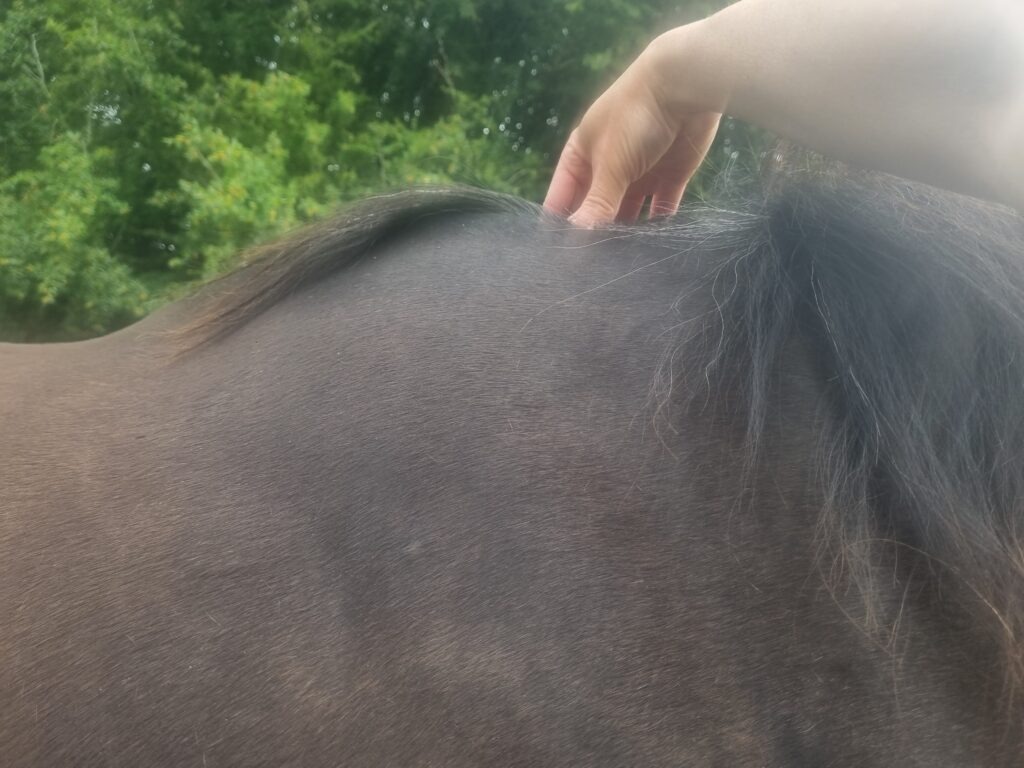
Lenkergefäß 14
Du Mai 14 | Da Zhui | Großer Wirbel | Meer des Qi
Lokalisierung: In einer Vertiefung auf der dorsalen Mittellinie zwischen dem siebten Halswirbel und dem ersten Brustwirbel am Halsansatz kranial des Widerrists.
Charakteristik: Klärt Hitze und vertreibt Wind
Westliche Indikationen: Probleme der Hals- und Brustwirbelsäule, Fieber, Atemwegserkrankungen, Überlastung durch Hitze
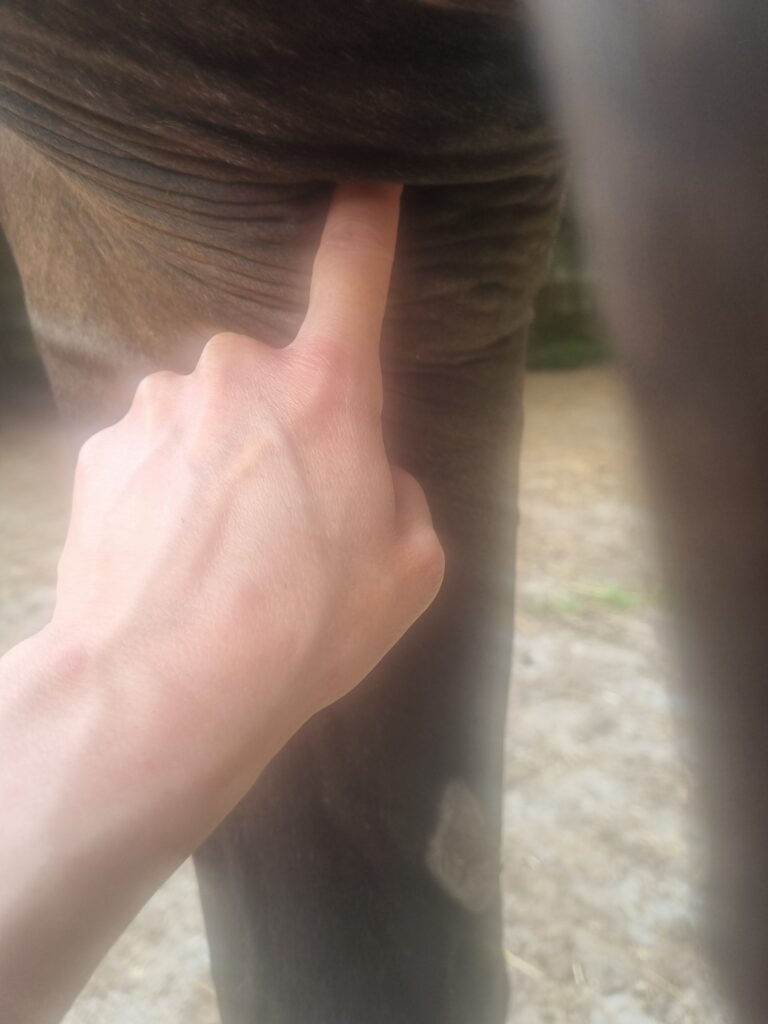
Perikard 3
Xin Bao 3 | Qu Ze | Sumpf an der Biegung | Wasserpunkt.
Lokalisierung: In der medialen Ellenbogenbeugenfalte, kranial von Herz 3, auf ulnarer Seite des M biceps brachii
Charakteristik: Klärt Hitze und vertreibt Wind. Kühlt Blut.
Westliche Indikationen: Hitzschlag, Schmerzen der Schulter oder des Ellenbogens, Hautallergien, Hautausschläge und Fieber
* Der Akupressurpunkt „Perikard 3“ ist nicht ganz einfach zu lokalisieren. Ich empfehle, sich an den knöchernen Orientierungspunkten lateral sowie an der Lage des Akupressurpunkts „Herz 3“ zu orientieren. Und wenn Du stattdessen mit „Herz 3“ arbeitest, ist das auch nicht schlimm, da es sich um einen weiteren gut geeigneten Akupressurpunkt zum Ausgleich von Hitze handelt.
Achtet darauf, dass Ihr bei der Akupressur an einem ruhigen, relativ ungestörten Ort seid. Ihr könnt die Arbeit mit diesen Akupressurpunkten gerne in Eure Putzroutine integrieren. Übe am Anfang sanften, gleichmäßigen Fingerdruck für ca. 30–60 Sekunden lang auf dem Akupressurpunkt aus. Lasse ihn los, sobald das Pferd Zeichen der Entspannung zeigt. Beziehe die Punkte auf beiden Seiten des Pferdes ein. Beobachte stets die Reaktionen Deines Pferdes und brich die Akupressur ab, wenn es Anzeichen von Unbehagen oder Schmerzen zeigt, und kläre die Ursache für eine solche negative Reaktion mit Eurem Tierarzt ab. Diese Sitzungen ergänzen, ersetzen jedoch nicht die tierärztliche Behandlung.
Warte nach dem Füttern von Kraftfutter mindestens zwei Stunden mit der Akupressur.
Wende keine Akupressur bei tragenden Stuten an, da dies die Wehen einleiten kann.
Konsultiere bei unklaren Problemen oder Reaktionen einen Tierarzt.
Und ansonsten: Bleibt cool und genießt den Sommer! 🙂
Hinweis: Pferdeakupressur ist eine ergänzende Behandlungsmethode und kein Ersatz für tierärztliche Betreuung. Konsultieren Sie vor Beginn einer Akupressurbehandlung stets einen Tierarzt oder einen zertifizierten TCVM-Praktiker, insbesondere bei Pferden mit bestehenden Gesundheitsproblemen.